As the world marks the international day of the girl child, St Anselem Care Foundation has reaffirmed its commitment to promoting menstrual health and ending period poverty – reflecting on its successful pad donation tagged Dignity Project held in Calabar, Cross River State where approximately 250 menstruators were reached.
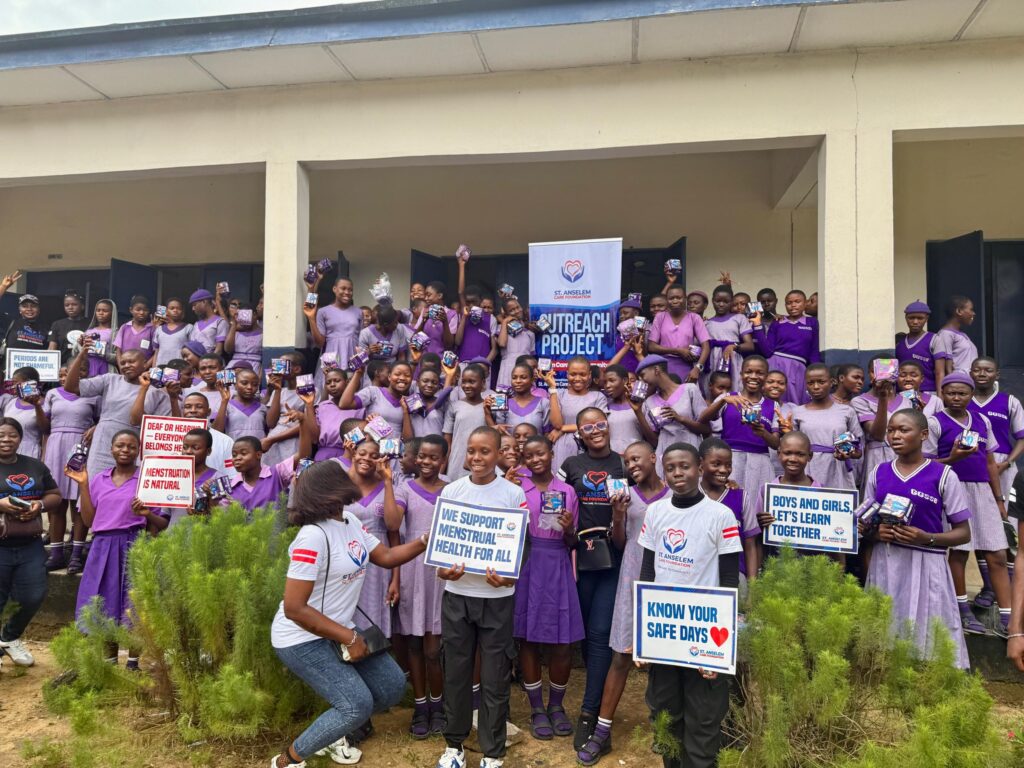
The outreach, held at 3 selected schools, brought together secondary school girls, youth advocates, and health workers for an interactive session on menstrual hygiene, self-esteem, and reproductive health.
Founder of the organisation, Iniobong Udo, said the initiative aims to empower young women to manage their menstrual health with dignity and reduce stigma around menstruation.
“Menstruation should never be a reason for shame or exclusion,” Iniobong said. “Our goal is to ensure that every young woman has access not just to sanitary products, but also accurate information, and the confidence to pursue her education and dreams.”
She explained that the pad donation drive forms part of the NGO’s broader commitment to ending period poverty, promoting gender equity, and supporting young people’s wellbeing, especially those from low-income communities.
The event also featured educational talks led by Dr Ken Oqua on menstrual hygiene management, myths surrounding menstruation, and the importance of male inclusion in menstrual health discussions.
A representative from one of the beneficiary schools, Special Education School, a school for children with speech and hearing impairments commended the NGO for its rare and uplifting experience as their school is often overlooked with most interventions.
Since its establishment, St. Anselem Care Foundation has implemented several community-based initiatives focusing on menstrual health education, medical outreach. The organisation continues to collaborate with schools, community leaders to break stigmas and create equitable access to health resources.
The event ended with a pledge from participants to continue raising awareness and supporting others in their communities through peer education and advocacy.